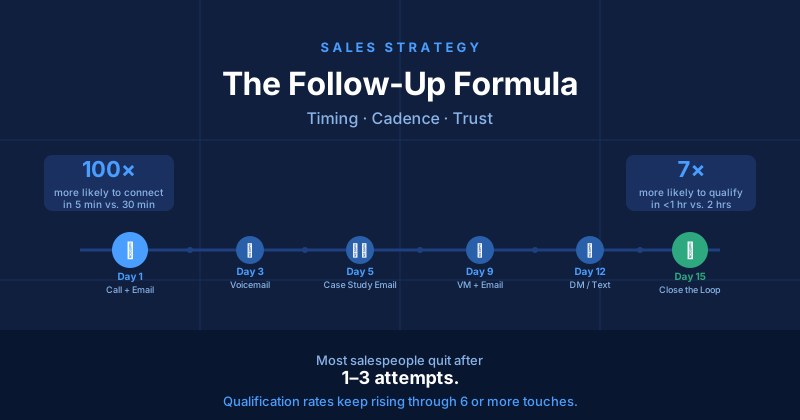
The Follow-Up Formula: How Timing, Cadence, and Trust Win More Sales
Most salespeople make the same mistake after a great first conversation: they wait too long, follow up too few times, and then quietly give up.
Posts by:
Most salespeople make the same mistake after a great first conversation: they wait too long, follow up too few times, and then quietly give up.
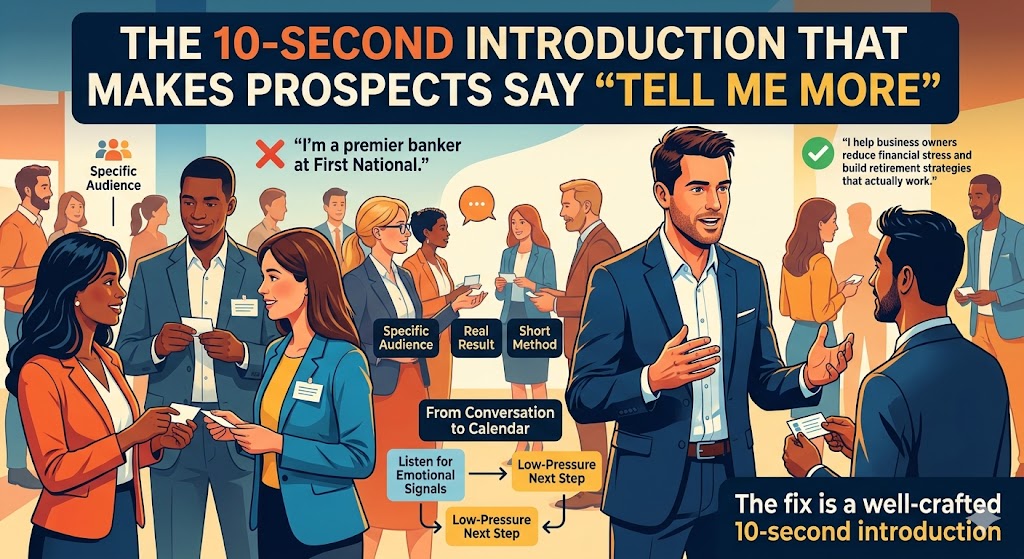
If you've ever introduced yourself at a networking event and watched someone's eyes glaze over, you already know the problem. Most salespeople lead with their job title, their company name, or a paragraph of backstory. None of that creates curiosity. None of it earns a next conversation.
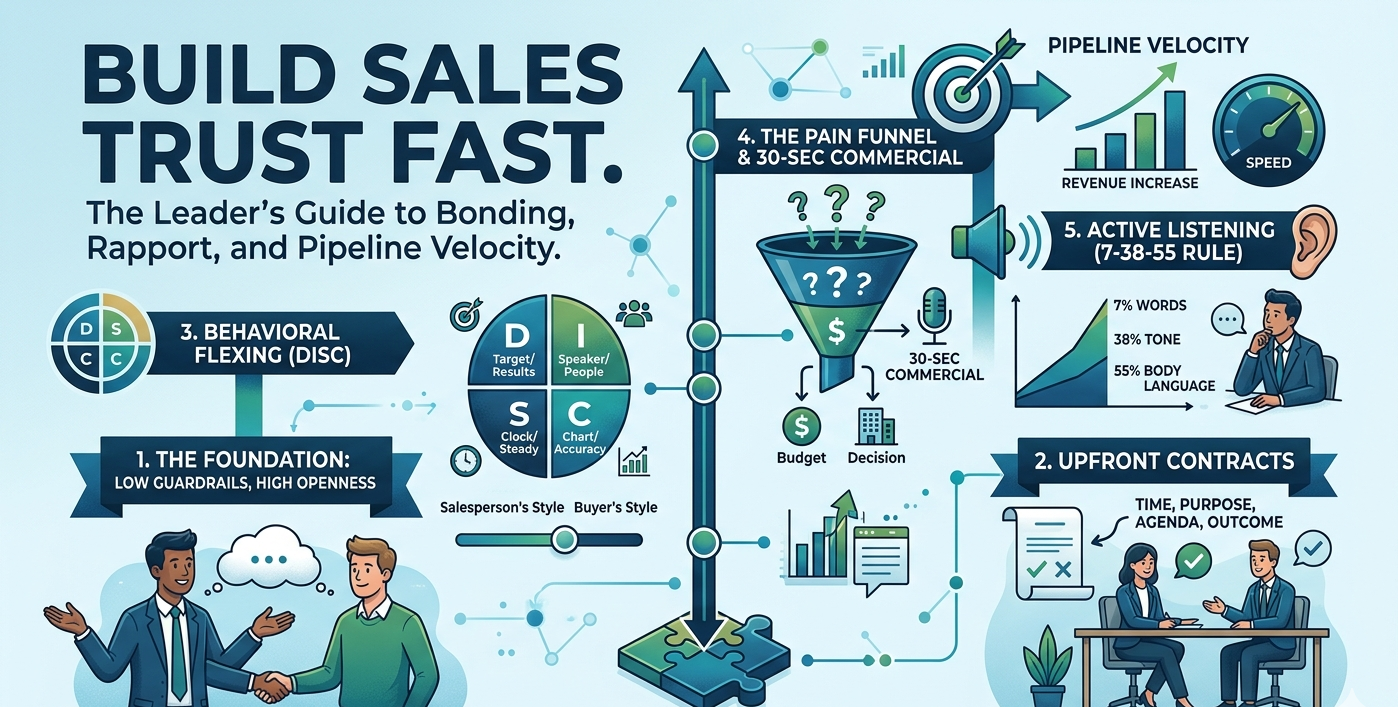
In high-stakes B2B sales, the primary bottleneck isn't "weak closing skills"—it's lack of discovery depth. When buyers don't feel psychological safety, they provide surface-level data, leading to bloated pipelines and "no decision" stalls.
An upfront contract is a clear, mutual agreement at the start of a conversation about purpose, time, agenda, and possible outcomes. In tech sales, using upfront contracts aligns expectations, lowers buyer resistance, and gives your team control of meetings without pressure, especially in long, complex buying cycles.
Most sales managers don’t have a motivation problem.
They don’t have a talent problem.
And often, they don’t even have a closing problem.
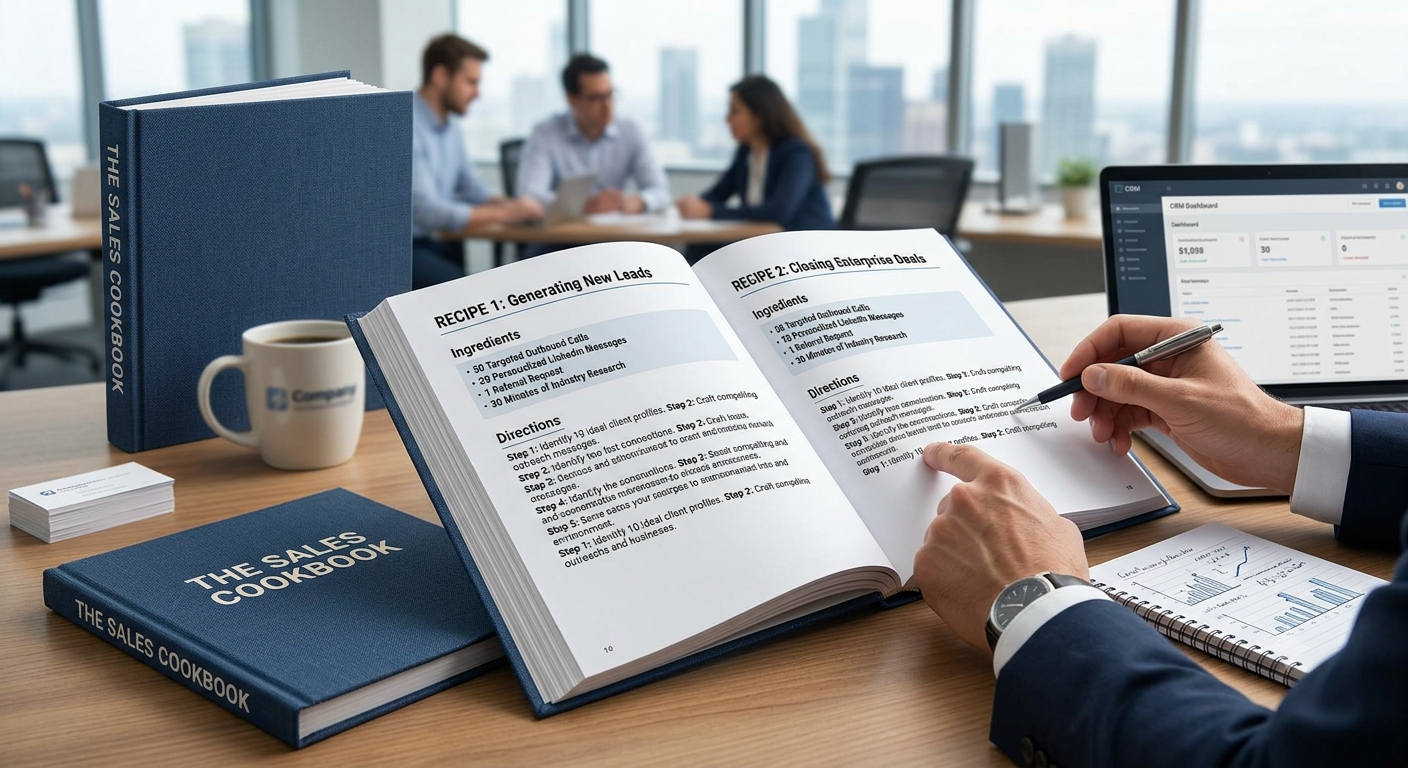
In the high-stakes world of sales, the difference between a record-breaking quarter and a missed quota often comes down to one thing: consistency. Many sales reps "wing it," relying on talent and luck. But top performers rely on a Sales Cookbook. A cookbook isn't just a checklist—it’s a personalized, behavior-based roadmap that tells you exactly what to do every day to guarantee your year-end results.
Most salespeople don’t plan to wing it—but that’s often what happens without a clear sales system. Conversations drift. Deals stall. Forecasts become wishful thinking. And a lot of time gets burned on prospects who were never a fit in the first place.
We often hear that "seeing is believing," but when it comes to personal growth, seeing is achieving. A vision board is more than just a craft project; it is a strategic tool designed to bridge the gap between where you are and where you want to be. By turning abstract desires into a tangible collage of images and words, you create a visual roadmap for your subconscious mind.
The Sandler Pain Funnel is a structured, systematic questioning technique used in the Sandler Selling System. Its purpose is to guide a prospect from identifying a vague, surface-level problem to fully realizing the deep, often emotional and financial impact of that problem, thereby creating a sense of urgency and motivation for change.
Building strong relationships with prospects and customers is the bedrock of enduring sales success. By prioritizing genuine connection over transactional interactions, sales professionals can cultivate the trust, open communication, and mutual understanding necessary for long-term business partnerships.